
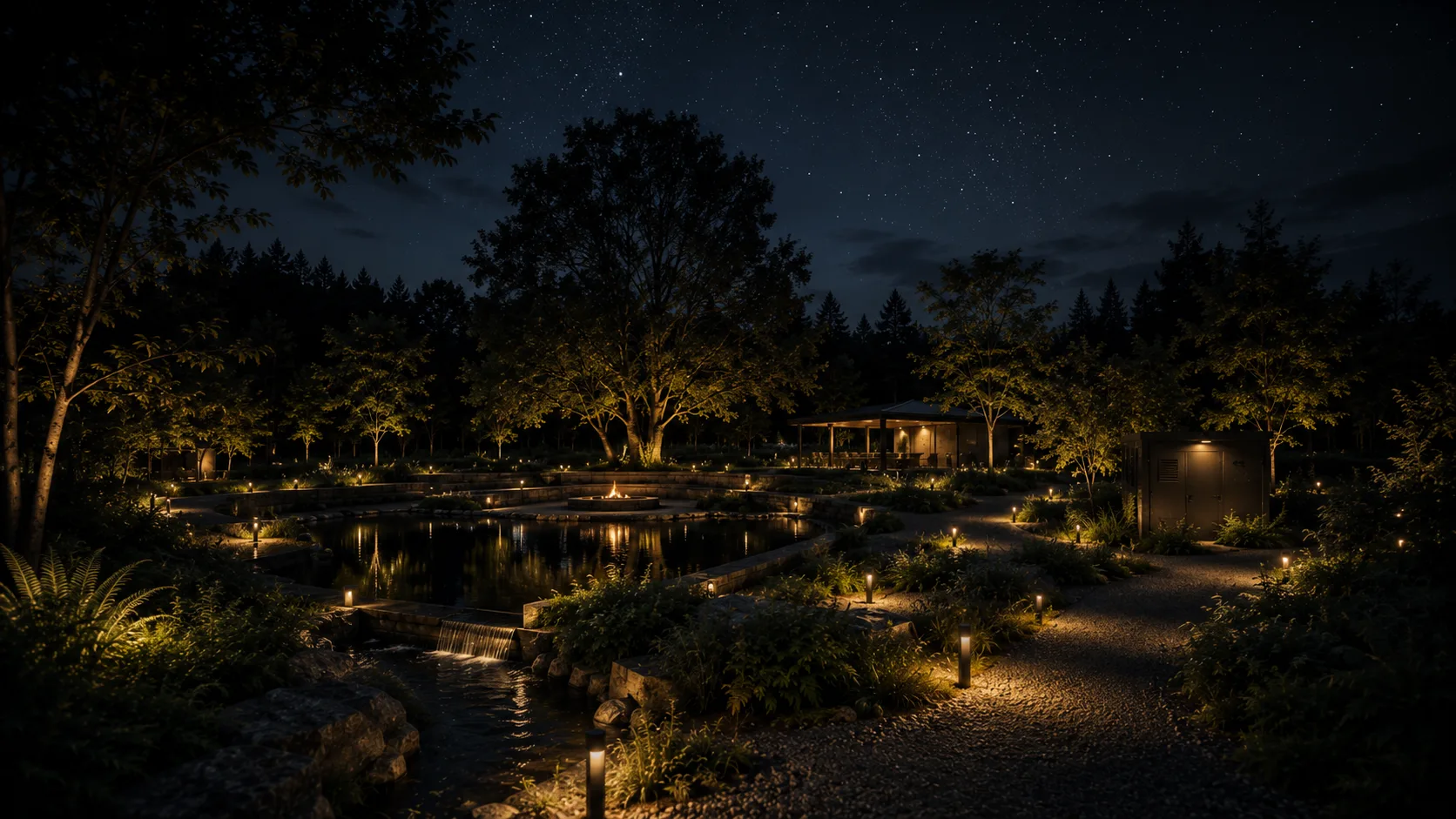
SPECUS VILLAGE — ENGINEERING RESILIENCE
Fallback plans for critical systems
Engineering resilience means preparing the settlement for interruptions to electricity, water, communications, access, and external service. Each critical system receives a backup, a responsible person, a switching procedure, and an inspection schedule [1].
:::
01 / Concept scope
A reserve becomes a system through regular testing.
| System | What is designed | Result |
|---|---|---|
| Energy | backup power and a critical-load circuit | communications, pumps, and emergency lighting remain available |
| Water | storage, filtration, pumps, and quality control | defined volume and distribution procedure |
| Communications | primary and independent backup channels | coordination during network failure |
| Technical areas | separate maintainable room | equipment is protected and accessible to staff |
| Monitoring | sensors and event log | system status can be verified |
| Operations | instructions, roles, and tests | reserves work in daily practice |
02 / Energy and water
Energy
A possible configuration includes batteries, solar generation, a hybrid inverter, a generator where permitted, emergency lighting, and separate supply for communications, pumps, and sensors.
| Scale | Preliminary level |
|---|---|
| 1 home | portable power station and backup for communications and lighting |
| 5–10 homes | shared battery system for communications, pumps, and lighting |
| 20 homes | technical room with batteries, inverter, distribution, and monitoring |
| 50+ homes | separate energy zone following an engineering project |
Water
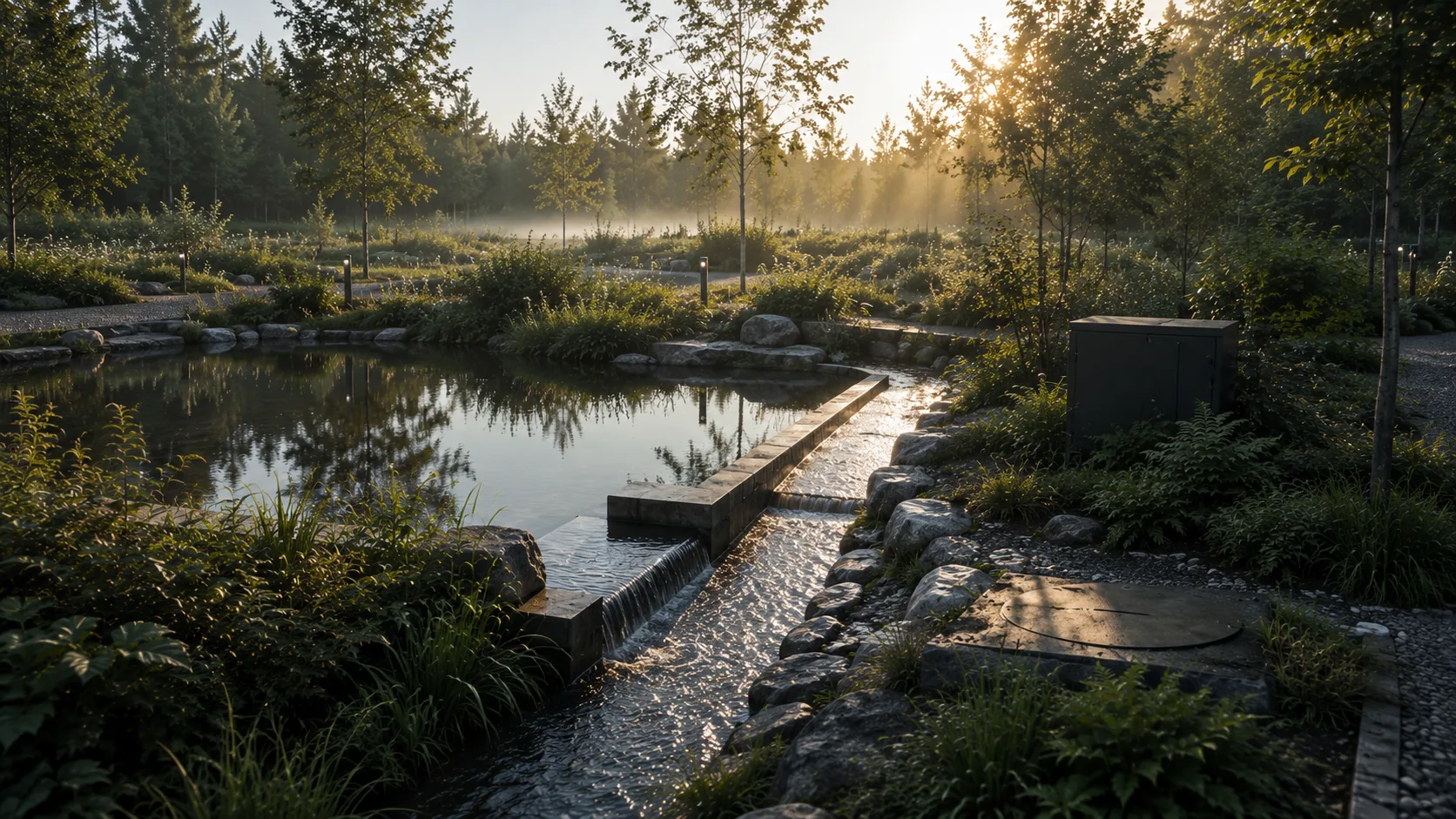
The water system covers the source, calculated storage, drinking quality, technical water, filtration, backup pumps, emergency distribution, and access for tank cleaning.
Equipment selection considers climate, freezing or overheating, tank material, refill source, contamination protection, pump power, and laboratory testing intervals [2].
03 / Communications
| Level | Channel | Purpose |
|---|---|---|
| Primary | fibre, fixed internet, 4G, or 5G | daily communications |
| Alternative | independent provider or satellite internet | backup external access |
| Local | LoRa / Meshtastic | short messages and status within the site |
| Procedural | signals, assigned roles, and assembly point | coordination without a digital network |
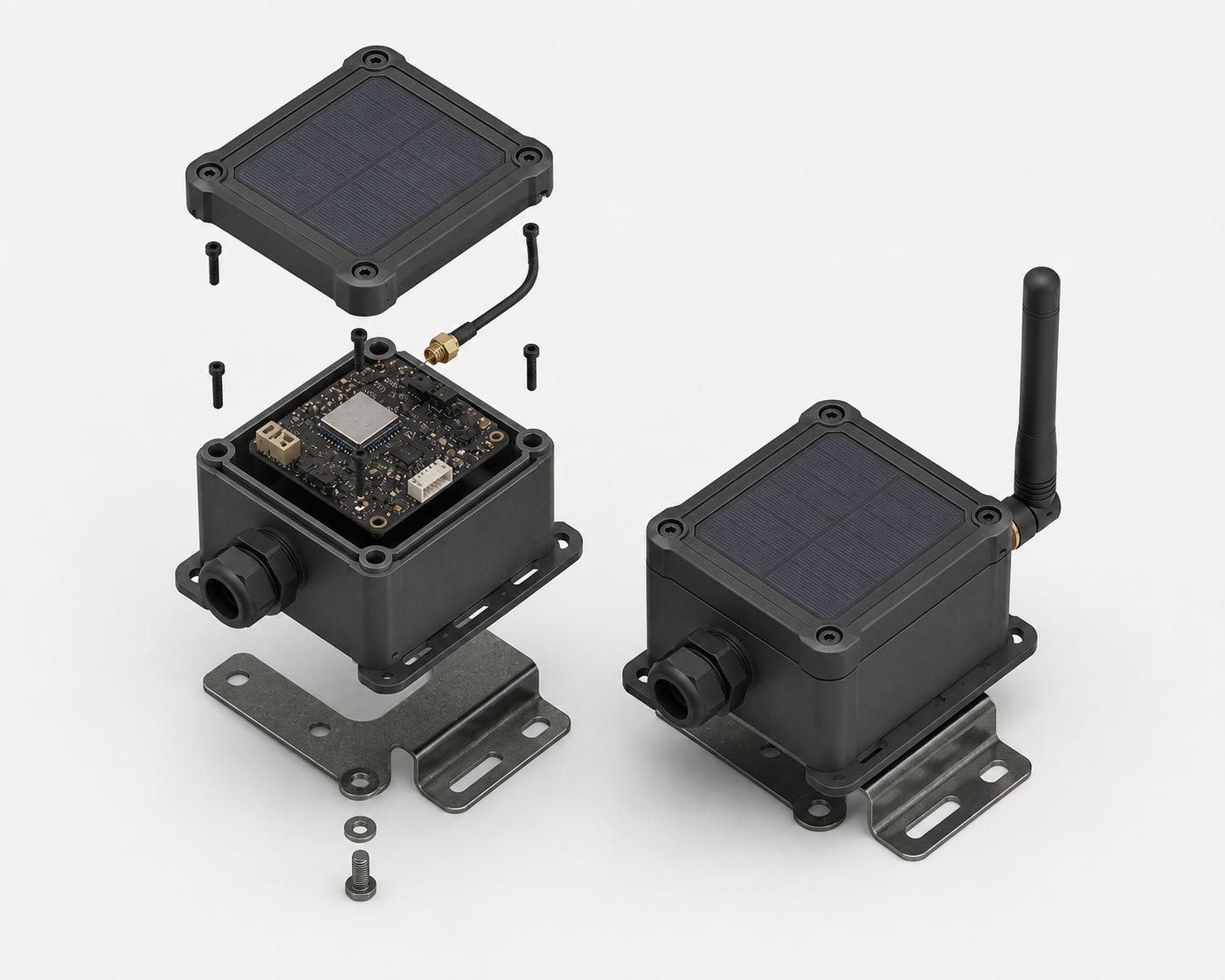
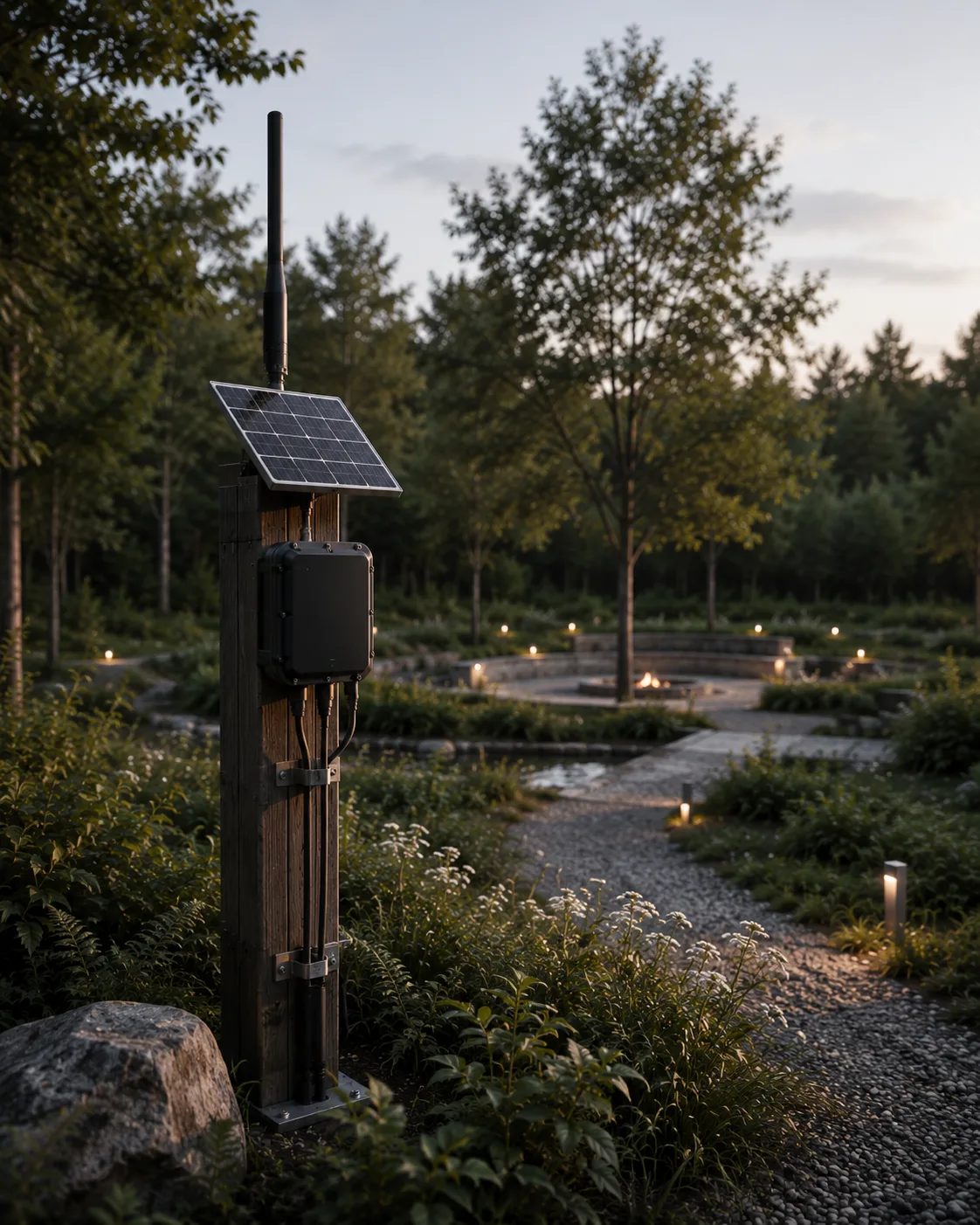
A pilot may include personal nodes for responsible participants, fixed repeaters, a gateway in the technical room, exterior antennas, a coverage map, and a monthly test.
The local network supplements internet, mobile service, and official alerts. It does not replace emergency services [3, 4].
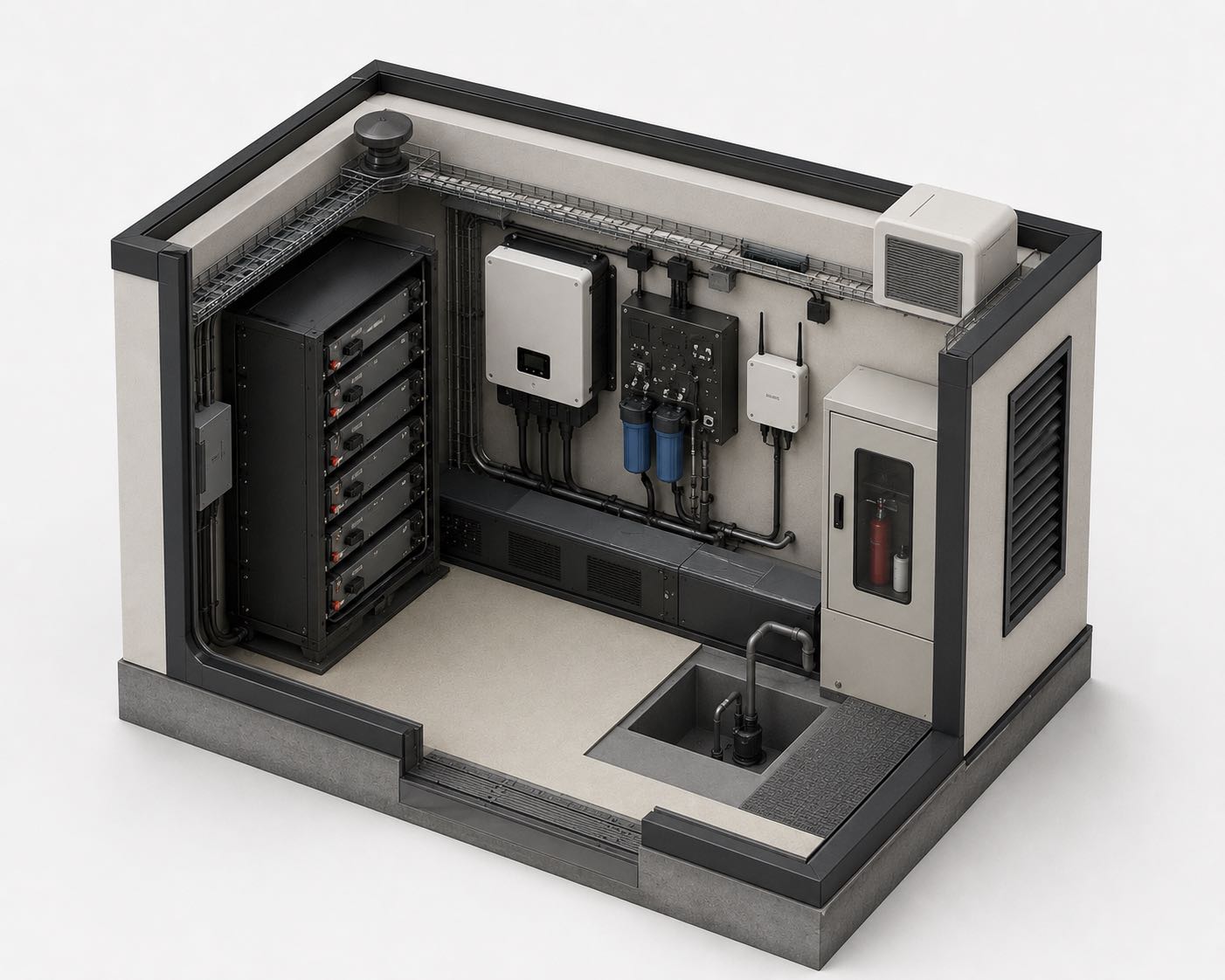
04 / Protected utility room
One controlled room can contain batteries, an inverter, electrical panels, backup communications, pumps, filters, tools, spare parts, fire detection, and environmental sensors.
Its design must address ventilation, fire safety, temperature, maintenance access, drainage, and separation of incompatible equipment.
The room functions as an engineering core. Human occupancy or shelter use requires a separate project, ventilation, exits, calculations, permits, and certification [8, 9].
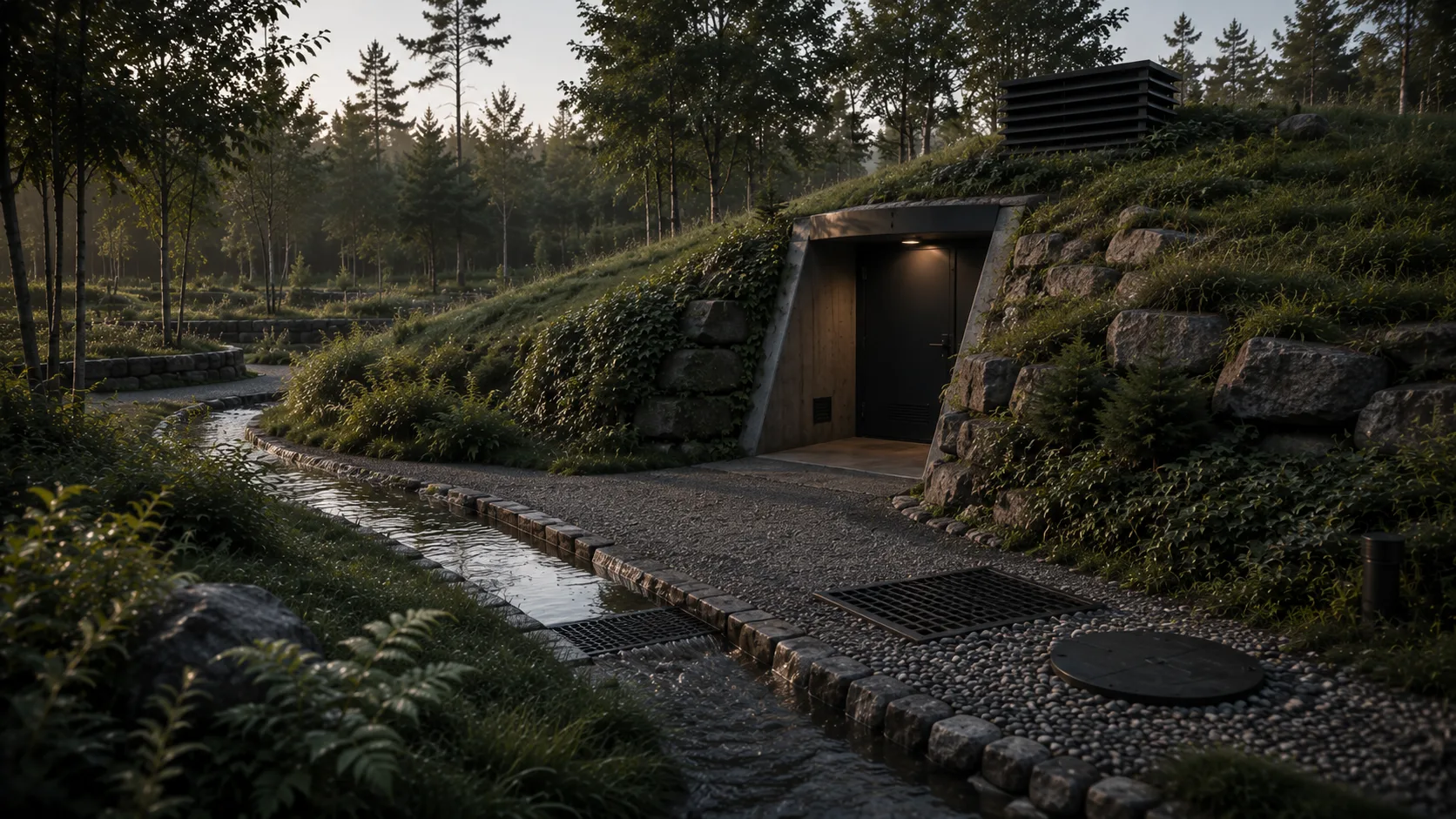
05 / Buried solutions
| Format | Possible use |
|---|---|
| Buried technical module | storage or utility zone |
| Corrugated steel pipe | passage or service gallery |
| Precast concrete module | underground passage or utility channel |
| Buried tank | water reserve where soil conditions allow |
| Earth berm | visual, acoustic, and service buffer |
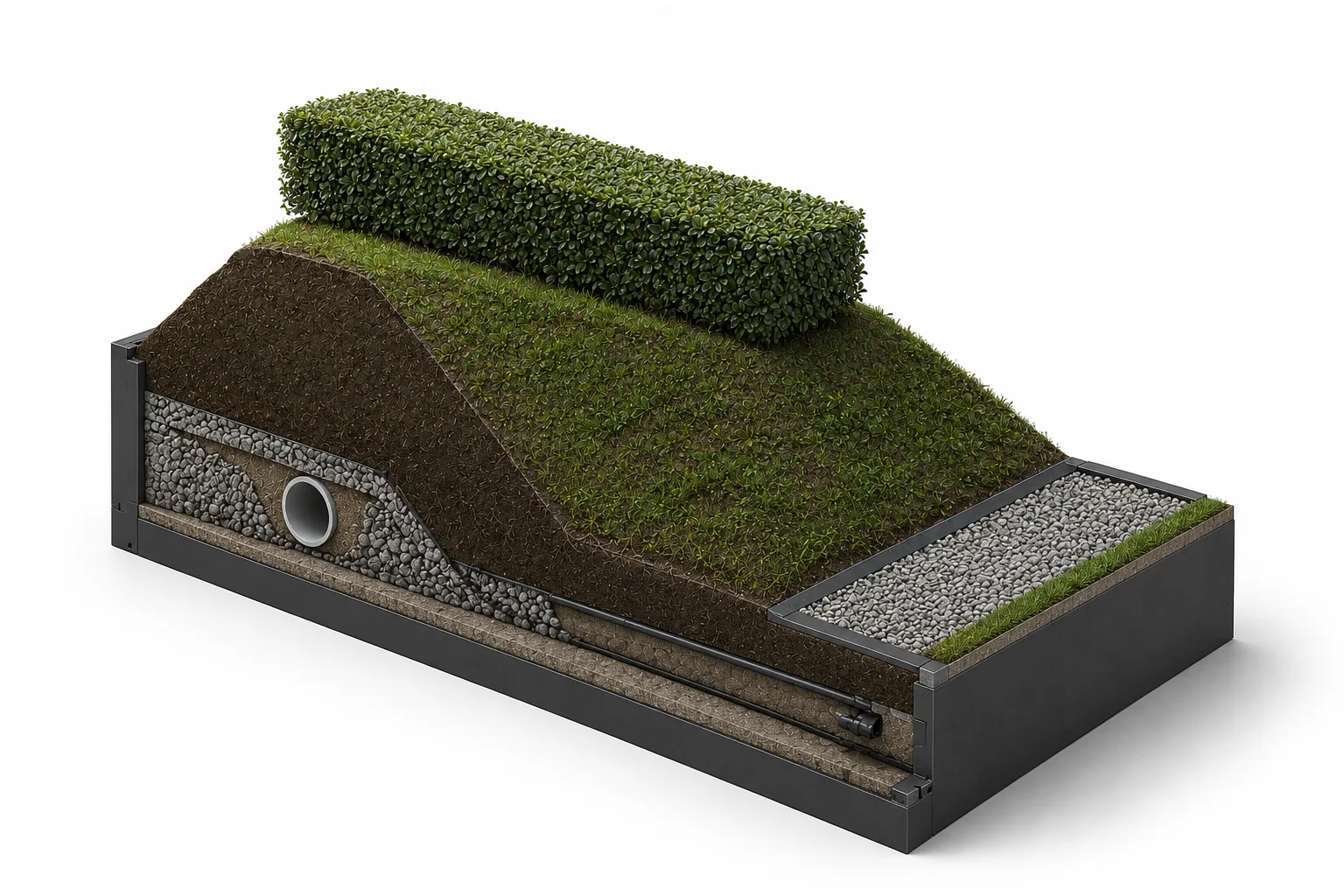
A standard shipping container is not designed for permanent lateral soil pressure. Burial requires structural calculations, waterproofing, ventilation, drainage, escape routes, and a groundwater assessment.
06 / Monitoring and operations
A minimum monitoring package may include water-level and leak sensors, smoke and temperature detectors, battery status, air quality, utility-room access, and communication availability.
Every device record identifies its location, responsible person, test interval, battery life, calibration method, and alarm response.
Pilot for 20 homes
- Map critical systems and failure points.
- Calculate water demand and critical electrical loads.
- Establish primary and backup communication channels.
- Provide a separate technical room.
- Prepare a site map, assembly point, and first-aid station.
- Assign roles and maintain a service log.
- Run monthly tests and an annual engineering review.
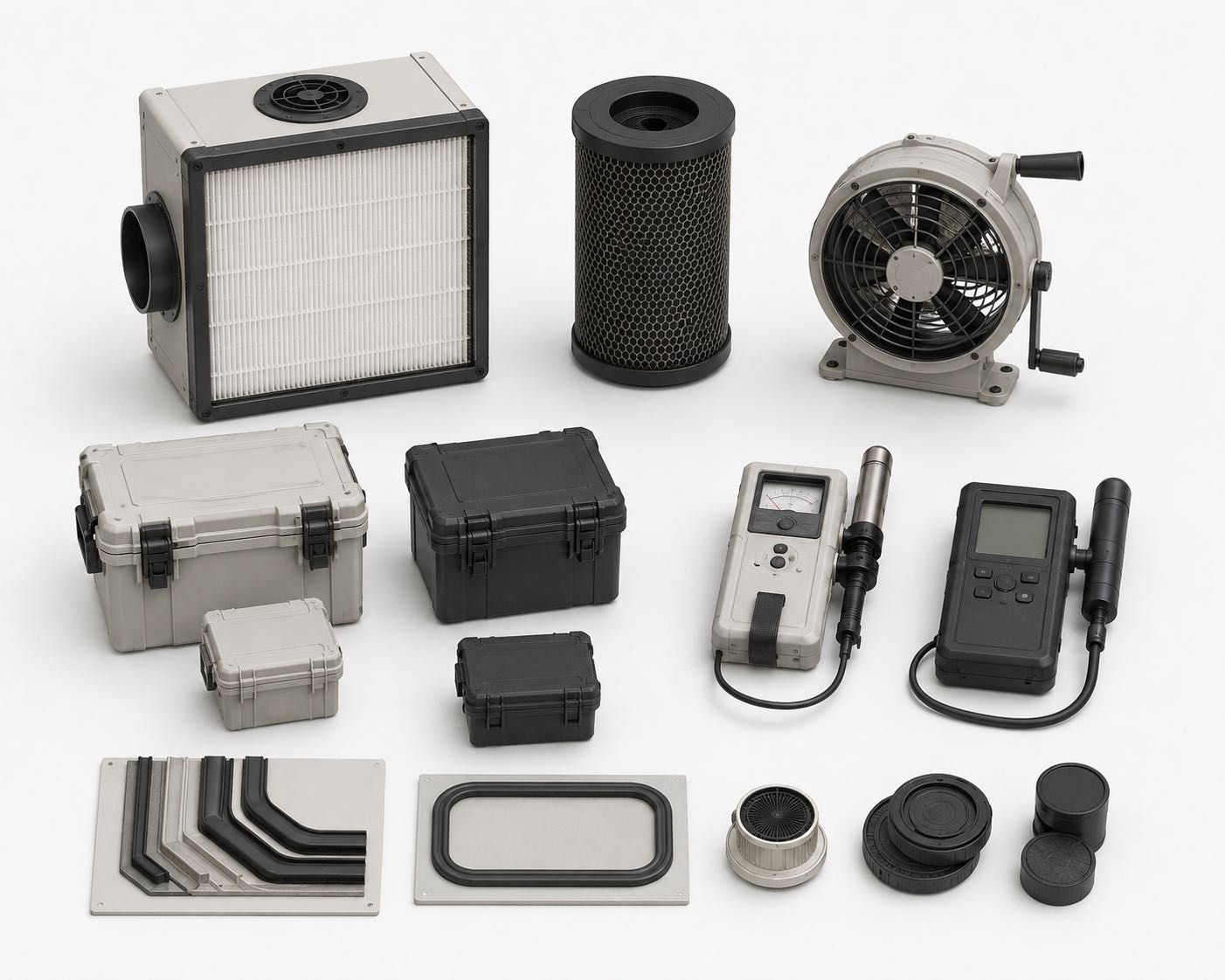
07 / Procurement, responsibility, and claims
Batteries, inverters, tanks, pumps, filters, communication nodes, sensors, and prefabricated utility enclosures can be sourced internationally, including from Chinese suppliers. Certificates, warranty, service, spare parts, local-grid compatibility, transport, and customs requirements must be checked before ordering.
Specus Village can prepare a preliminary engineering concept, equipment schedule, utility-room requirements, and questions for local designers. Authorised specialists complete the final design, installation, and commissioning.
Public descriptions may refer to backup power, water storage, multiple communication channels, a protected utility room, emergency maps, and staff readiness [1–4, 10].
Claims involving bomb shelters, blast protection, radiation protection, guaranteed survival, or certified shelter function require a specialist design, testing, and applicable certification [5–9].
08 / References
SA-1 / pre-order list
Leave your email and we will send the price, timing, and pre-order opening date.